This is part learning, part experiencing, part designing + Building a lo-cost, no op-cost, close-the-loop Eco Home owner built + designed in the Sierra Mountains.
It's finally summertime at WinSol3. and the livin' is easy. Enjoying the incredible blooms of the wildflowers. Most of them are perennials which have automatically reseeded themselves from last year.
The more i learn about Sepp Holzer's permie style, the less work I am doing.
I just announced two open house weekends here. If anyone is interested in an invitation, please email me (fredk at gmail)
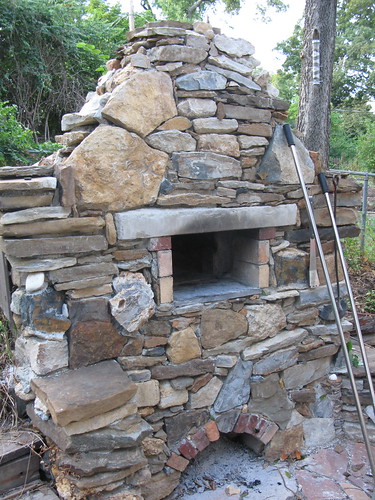
So I will be doing three main projects this summer: The pizza oven which will require moving the firepit and replacing it with a rocket stove mass heater... which will be smokeless and keep people way warmer for 1/10th the wood. These rocket sotves/heaters are one of the most amazing things I've learned about this year - thanks to Sieben Linden's Ole. And also from the same source - I'll be digging the foundation for the PAHS guest house. PAHS stands for Passive Annual Heating Storage, this one is Dr. John Hait from RMI book from the 70's.
Always learning and movin' at WinSol3. Non stop fun + curiousity.
Someone emailed me using the word 'Junuary' and it is so apropos. January in June is where it's been at until today - hopefully. The last three days it rained almost continuously. As I hung up my winter parka and stowed my Sorrel winter boots this morning - I wondered outloud if this will finally be the last time this season, and reminisced about how many times I've said the same thing this season. I don't even know what 'season' to call it - it sure as hell isn't spring or summer.
I opened up the loft curtains on WinSol3 for the first time in 2months - they have been drawn 24/7 - day + nite. That's the last time it was warm inside (without the fireplace churning). Since WinSol3 is specifically designed for optimal solar angles - this cold May + June are not 'normal'. The loft curtains are my simple version of adding thermal insulation on the fly. They came in handy for the past two months, and they trapped more heat inside the main area. Unfortunately this also cuts down on the daylight so it's real nice to have them open.
The next 10+ days are supposed to get over 70F and things should really start popping in the garden, the courtyard and the greenhouse. How many times have I said that before? Heck, even January with its 70F days had some things starting to pop out of hibernation.
Permies+
I am using my new-found permaculture knowledge to build wonderful potatoe rings, unique quick in-place compost piles, splitting many many lavenders, rhubarb (baked another delicious pie yesterday), etc. I think once I get my 'gated' gardens going well with ALL my own vegies + fruit without interference from the deer and racoons; i will venture into the woodlands and open areas and start putting a lot of effort into creating a perennial forest garden the way Sepp Holzer does it. He is my new 'god' - amazing that he can grow banana trees outside of Salzburg, Austria. He has taken the permaculture and Steiner biodynamic principles to a whole higher level.
The weather continues to be extremely weird. It snowed a bit three days ago, and will probably snow again today. Watching the mainstream weathercasts leads me to wonder if I am the only one noticing this continual shift to weirder and weirder weather patterns within Northern California as a whole. I think 'somebody' is trying to tell us something, and we are not listening - or we can't even hear.
Gratitude
At WinSol3, I am thankful for no super hot days. It is giving me more time to dig in the dirt before it gets bone dry. It saves from watering all my new raised beds. it allows me to work during mid-day periods which are usually very warm.
Current Projects
Worm Bin
Yesterday I finally got aroung to building my worm casting bin. I was all set to make it out of wood (cuz I really hate plastic) - and ended up using plastic for one simple reason: maintenance. With the wood bin, I would've needed to water it every week or so, and eventually would've forgotten and lost a whole bunch of the wiggly guys. So, hey- plastic to save the worms! After shredding the newspapers, putting in leaves and some deep forest peat moss along with coffee grinds and egg shells, i think the little guys are off to a good start. btw: I got the worms through a TimeBank exchange for some carpentry work I did.
GHS WaterFall + pond
Construction continues on the large water feature in the middle of the Greenhouse. Let's see, I must have about 1200lbs of concrete along with dozens of colored tiles in there by now with the side steps, deep catch+pump basin, river rock floor and the very cool terraced, six feet high water fall. I can't wait to test it! There remains an incredible amount of gardening work to do. The willow tree is doing nicely, the Virginia creeper really loves it and is vining like crazy. I transplanted all the blue beard iris out into the garden and put the knock-out roses at the southern most planter - it's not a very hospitable place, so those knock-out mutation roses should prosper!
Vegie Garden
The three new raised bed areas are doing nicely, the strawberries are quite confused with the weather + snow! I put in two rubber tire based potatoe planters and if they work out, there will be MANY more - they are so easy. Work continues on carving the native mountain misery landscape into terraced, walkable garden areas. I continue to harvest fresh salad material each day with radishes, spinach, root beet, lettuce and various other fresh leafed candy.
The lavendar, thyme, grapes, blackberries, raspberries, rhubarb, etc. are all prospering.
Indoors
Final wod trim,drywall and painting was completed last week on the main living area wall. YEAH - that only took a few years. I've re-opened the basement door access and will start organizing that and clearing out the entire unsightly eastern area, and close off the entire skirting. Loft, Trombe + chimney work
My work now shifts to the loft. Yesterday, I hard wired the entertainment center along with convenient switches, along with my keyboard area.... oh do I wish I had time to appease my musical piano yearnings. Soon, grasshopper, soon.
The Trombe loft wall will get its entire face done with granite rock later this week, then the final floor boards get put in, and walhla! another two rooms done. Just in time for summer visitors. Then there's the big, big project around July (sometime when there's guarantee of no rain) and the middle of the big green roof gets opened up to allow the final stone chimney to reach to the blue skies. Oh, do I look forward to no more collapsed steel chimneys in the middle of winter blizzards. And it will look so cool to have the stone work coming out of the roof.
----------------------------------------------------
So today, I do hope to finally take a walk in the woods even in the rain. The last few days there were the usual suspects revving their dirt bikes on the holiday weekend, and i do not care to run into them at full throttle on the forest roads.
Another day, week in the life of WinSol3 nature sanctuary.
May 15th!! and there’s 8inches of snow on the ground and -snowing hard!Talk about global weirding and the weather forecaster missing it.Sure they predicted a cold front and1”-3” of snow at SLT (6200ft) going as low as 3500 or 5000 feet.This was supposed to be a quick little storm that just ‘snuck in’.With the AMGEN( bicycle race scheduled to start at South Lake Tahoe this morning – ha!I wonder what all the event coordinators (not to mention the $ sponsors and $ profiteers) are cussing about California weather - and they moved the race from April to May. Yeah – here’s the world's smallest violin.
Anyone that thinks we aren’t in the onset of real climate change, and that we didn't have a hand in it, is smoking tea party dope. Pass the coffee for me. Watching the NTV Japanese news show the other day, they talked about scientists saying the El Nina (pacific warming) is over and a repeat of last year’s scorching summer heat killing hundreds would not happen this summer.I predict that it will be back with a vengeance and even hotter than last year – sorry to say.Empirical evidence suggest so.
Last year was the first year (since 1986 observations) it snowed lightly on May 1. This year it snowed on May 9th and now is really dumping on May 15th.I cannot believe the heavy flakes that are coming down outside!
Luckily, I spent the last three days knowing there was a weather event coming.As rural homesteaders have done for centuries, you always prepare for the worse and enjoy the better.This past winter, I enjoyed only a few betters.
This 2010-‘11 winter season has started the earliest and latest along with the longest and heaviest on record.I don’t really care for the way weather people keep records= data measurement misses so much.It’s the combination of factors – such as intensity of untimely storms – that are more important.I can see the myriad of data and metrics meteorologists would be gathering to measure intensity of untimely storms.Yet we can saunter up to the coffee counter and bitch about this late heavy snowfall destroying all the tree buds, pushing back seed germination for weeks, resulting in another pain-in-the-ass growing season.Something you can't easily measure.
WinSol3 Progress update
I had just gotten all three large raised beds done.Hauled bucket loads of deep forest rich peat moss (free and best!) and combined it with buckets of biochar laden soil from the firepit. Then yesterday I put in the seeds and put down the straw.Wish I had put a couple extra inches of straw down.
The large living roof underdeck is coming along nicely. With fir posts 3' OC, 2x6 cross beams every 1-2', topped by 2x6 odds+ends for top decking and then odds+ends of OSB and plywood decking - this sucker'll hold 6' of snow and then some. The raised underdeck already came in handy as I could easily clear the PV panels of snow - an extra design feature I threw in. Synergy for all.
It got down to 30F this morning.It’s a nice 62F inside without the fireplace on overnite.Trust me, I fired it up this morning.WinSol3 is perfect for this kind of freak temperature event.All the thermal mass (14+ tons)can easily transmit back its stored warmth for two or three days.And then we’re supposed to have sunshine and 80F in a couple days.
It snowed here yesterday = one for the record books. Last year (2010) is snowed for the first time in May, on May 1st. So yesterday (May 9th) is the new record. First it started as sleet (45F outside) and then the temperature dropped suddenly to 39F and it was snow flurries all around. Two hours later it was sunny and 50F! go figure.... global weirding.
Progress in the enlarged garden is coming along nicely. All the transplanted fruit trees are blossoming nicely now that the deer are not nibbling them. The split rhubard is popping as usual - it really likes it here! This is not a good year for tulips and other bulbs... very weird weather after the 70F January and cold March.
Progress on the living roof (greenhouse to main house) connector is coming along nicely. With 3-4ft OC fir posts and heavy 2x6 criss-crossing beams, this should be way more than needed for 12"of soil, sedum, and the inevitable 5+feet of heavy snow that will not go anywhere for weeks on end.
The brown steel panels in the right of this picture will be removed to reveal 4" piping that connects to the underfloor array of cinderblocks. The top heat from the greenhouse will naturally flow under the living roof into these cinderblocks, thereby naturally heating the subfloor of the main living area. It doesn't get simpler than that! It's all about design.
After taking my first deep forest walk since the start of the winter season, it is time to reflect. The winter of 2010-11 started and ended with very strong and intense storms. More intense than I have seen in 30 years.
~November 15, 2010 saw over 5 feet of snow dumped in one storm at 7L. It was great for skiing at Thanksgiving, but made life difficult for several weeks. There were more broken trees and blocked roads that are still being cleaned up 6 months later. Then in March 2011 (I was in europe) there were even more intense storms that had more high winds and a lot of snow. This broke more large trees and blocked more roads.
In January 2011 we have 5 weeks of very warm and sunny weather. It was 60F here (at 4200ft) in January! A lot of the trees started to blossom and then had to retreat. This sudden warmth did not fool too many trees tho. Most trees blossomed more in early April and hopefully there will not be another snow storm. (Last year it snowed on May 1st).
I consider these extreme weather patterns to be part of climate change: global weirding. This is great for providing California with a lot of water. Everything goes in cycles, and there will come the opposite cycle of NO WATER - and that is when WinSol3 will shine, because it was designed with this in mind. The only issue will be that I need to be here during each small winter rainstorm and make sure that all the systems capture and store the little rainwater/snow that will be available. A small price to pay for 'free' rainwater.
As summer draws closer, the last remaining challenge at Winsol3 rises up again: providing energy for food refrigeration. Summers here can get up to 90F in July and August.
Over the years my biggest nemesis in balancing a comfortable lifestyle with net-zero energy remains food refrigeration. This is a long blog on a very important issue for all net-zero and off-grid dwellers.
Let me start by reviewing common food storage techniques and then relate my attempts at solving this challenge over the last few years at WinSol3.
Food Storage:
In the old days (60% of households in the US owned a refrigerator by the 1930s, it was not until 40 years later that the refrigerator achieved a similar % in the UK) there were no refrigerators in most households. Mothers (usually) did summer and fall canning of foods, some people dried or salted their foods for winter storage. Nearly every household had some type of root cellar, and consumed seasonal and local foods only.
With the advent of cheap electricity, transportation and then cheaper labor, the green (agricultural) revolution bought food from faraway places to every ‘super’market in the world through a complex global supply chain. In the USA every one calorie of food requires 7 calories of fossil fuel to get it there! After 30+ years of this fossil-fuel driven supply chain, we are accustomed to having any food at any time - and we feel entitled to it.
Bigger is better?
Gone are root cellars, cold boxes, ice houses/ponds and seasonal/local consumption habits.
Instead we have twenty+ cu.ft. double-door 'french' refrigerators that defrost automatically with an endless array of temperature and humidity controlled compartments. Additionally, American suburban homes have at least one big chest freezer (usually in the garage) where endless cold meats are stored endlessly. Some buy a whole or half of a cow and keep it in those freezers for consumption months later. One of the sad facts is that over 50% of the food pushed to the back of refrigerators usually ends up in the garbage can.
The rest of the world is slowly catching up to the USA. Even though most European and Asian households have small 2-4 cu.ft. refrigerators, I've noticed many of these new households having bigger and bigger refrigerators.
We have grapes from Chile available in all USA/Europe/Asia supermarkets in January. We can have any food available to us from anywhere in the world 24/7/365. With peak oil in the past, and rising prices and shrinking supplies inevitable, what will the future of this food supply chain look like? One can only imagine its slow demise. Are we going to go back to root cellars, canning, and ice ponds? Probably not.
So what are the solutions? That is where eco-village and local off-grid visionaries may provide some possible solutions.
Added note: Off-grid homes usually have a propane powered Sun Frost Refrigerator. These units cost well over $1,200. and use a substantial amount of propane gas each year. They are 80% more efficient than off-the-shelf electrical refrigerators.
Now, back to WinSol3’s food refrigeration history. Here's the story of my food storage journey over the past 5 years, summarized into four main areas: (Note: I had a digital thermometer inside each cold box.)
#1 Try= small fridge
My first attempt 5 years ago, was to use a small ‘bar’ refrigerator. These small refrigerators provide ~two cu.ft. of cold storage with a tiny freezer. Their compressors draw about 3.5 LRA (locked rotor amps) as opposed to 20+ LRA for big fridges.
Since there is an inductive load presented to an inverter, fridges have a high amperage surge as they startup. My 3,000 watt inverter usually beeped (draws more than it’s rated amps) for a few seconds while the compressor surges on startup. As long as I have bright sunlight (no problem in California summers) the small fridge worked fine. After sunset, each time the compressor cycled on, the inverter load was exceeded and eventually the battery voltage went below 12.1 VDC (my low voltage setpoint). I tried putting frozen water bottles in and keeping the fridge off overnight, but could not continuously freeze enough water bottles during the day for the small freezer.
#2 Try = two cu.ft. cooler inside a cold box
My next try was keeping the food cold in the fridge during daylight hours and transfering critical foods like chicken, seafood, etc into a cooler overnite. That lasted one week before I realized that doing this every summer day was going to be labor intensive. I tried transferring frozen water bottles into the cooler and eventually transitioned totally to the cooler using the fridge to occasionally freeze water bottles. Several people on the internet commented this was their preferred method. Again, after a few weeks I also gave up on this, because it was still too labor intensive.
I purchased a new, bigger, more insulated cooler. I made a cold box under the kitchen counter (the bottom of the cooler was in direct contact with the cold basement) and put in extra 4”of XPS insulation all around it – except for the bottom; and placed the cooler into the box. This ‘cold box’ is still used to this day with #3 ice added.
#3 Try = Success! Cold Box + purchased Ice
Every time I went to the local grocery store I started buying ice blocks to put into the cold box cooler. This worked great – the cooler inside the cold box would stay below 40F for over 7 days with the ice block. Eventually tho this was tiresome, as spending money and transporting ice blocks from a store was not my idea of sustainable living. So I purchased an electric ice maker.
#4 Try = Cold Box + PV produced ice.
My thoughts turned to what other mainstream consumer products were available that could make things cold without upsetting my solar powered inverter. I researched various portable ice makers and purchased one for $99.
It works great, and I can make about 3 pounds of ice each summer day in bright sunlight with my PV panels. I use the ice for my cold drinks and put the rest into the cooler inside the cold box. It’s still a bit labor intensive, but it works.
(Note: from November to April at WinSol3 there is no issue since snow is readily available)
Changing lifestyle cooling practices
The real issue in food cooling is having the convenience of cold storage at our finger tips with minimal efforts. As RMI + Avory Lovins recently have stated: 'We don’t use energy, we use energy services.'
The energy service I wanted was to keep certain foods cold.
I started researching how others had done it before compressors and cheap electricity were available. There’s a lake off Hwy 50 between Placerville and Tahoe called ‘Ice House’ named appropriately because here pioneers of the 1800’s skimmed ice from the top of large ponds specifically designed for this use – and delivered the ice via heavily insulated cold boxes to the supermarkets in the hot summer California Valleys. Image the embodied energy of human labor on each ton of delivered ice!
But the real solution to refrigeration lies much deeper: our lifestyle of eating and preparing food and basic physics. Language is also important: instead of calling it refrigeration, I like saying ‘cold food storage’ – which is really the energy service we want.
The key questions are:
(a)which foods need which temperatures for how long?
(b)Which foods do we need for nutrition? And how long from harvest to eating?
The latter is all about choice. As in any lifestyle choice, this is a personal question and no science or debate can convince someone to do with or without a certain food. But once I had the answer to (a),which can be found through siteslike this one from Virginia Tech:
"For optimal quality and safety, dairy products should be stored at refrigerated temperatures between 34°F and 38°F, meats between 33°F and 36°F, and eggs 33°F to 37°F. Fresh vegetables and ripe fresh fruits should be stored between 35°F and 40°F. Always store refrigerated foods at temperatures less than 40°F."
It was really easy to change my lifestyle choices with some knowledge of the refrigeration energy it takes to cool foods and to change a little bit of lifestyle.
My keys to net zero energy Food cooling
The first step to reducing an energy profile for cold food storage is to inventory your households eating habits (especially during hot summer months):
My personal food habits include:
Eating ice cream in the summer
Seafood once a week.
Papayas, pineapple, yogurt, eggs,
Given these personal food habits, I had to adjust my life style a bit. Instead of ice cream, I make smoothies with fresh berries and ice cubes from the icemaker. I only store seafood about once a week and use the local grocery store as my 'outsourced' freezer supplier - its free! (cold storage only :-)
A personal note:
I don’t freak out about having 'perfect' food - I don't understand why a little blemish on a strawberry or apple make some people throw the whole thing away. I am a firm believer that farm kids are much healthier than city kids because of their exposure to all kinds of bacteria at a young age. I also believe we need to continue this throughout our adult lives keeping our immune and other systems tuned-up. So, I do not abhor eating a little 'dirt' every now and then. Since all my vegetable beds are biodynamic (no chemical fertilizer or spray, +++), a little bit of dirt on the lettuce or radishes is no biggie!
If it wasn’t for my experimenting through steps #1-4 above, I don’t think I can go into step #5 below.
Step #5 – my ultimate solution for cold food storage
It’s a five step process:
First, and foremost are WinSol3’s gardens, greenhouse and hotbox. These three places can provide me with green leaf veggies and more, year round. Nothing, and I do mean – nothing! – beats freshly picked produce from a garden where biodynamic principles are practiced along with local rainwater.
Second, are my de-hydrators and canning processes. This takes either my, or a local neighbor’s excess harvest and prepares it for long term storage. I like to store dried herbs and mushrooms this way.
Third, is the root cellar which is currently under construction in the basement of WinSol3.
Fourth, is the cooler within a cold box and summertime PV driven Icemaker (#4 above). Right now that is located below the kitchen counter, and is a bit awkward to access. I wish I had built an upright vertical cold box. I am still contemplating on doing this – the added convenience of not having to stoop down to access cold food as I get older (20" is the lower limit).
Fifth, are for special occasions for parties, tours, weekend visitors, etc. This is outsourced to the local grocery store and perhaps an ice block.
I wonder what will happen first: Changes to our food supply and habits, or new hi-tech, appropriate + balanced solutions?
Personally, I’m not waiting for the promise of hi-tech. Changing my cold food habits has been a long journey, and I still have a ways to go. Change is difficult, if it’s not – you’re not changing. Try putting your sweater or coat on with the opposite arm – see how weird it feels? That’s change.
Adsorption refigeration is making big inroads in the cooling industry. This proven technology has been used by industry for decades. With the advent of affordable solar thermal systems and California’s sunny summers, solar hot water with adsorption chilling is a huge promising industry. Stay tuned.